queue_music

Afro Fusion Music: What It Is, Where It Came From, What To Play
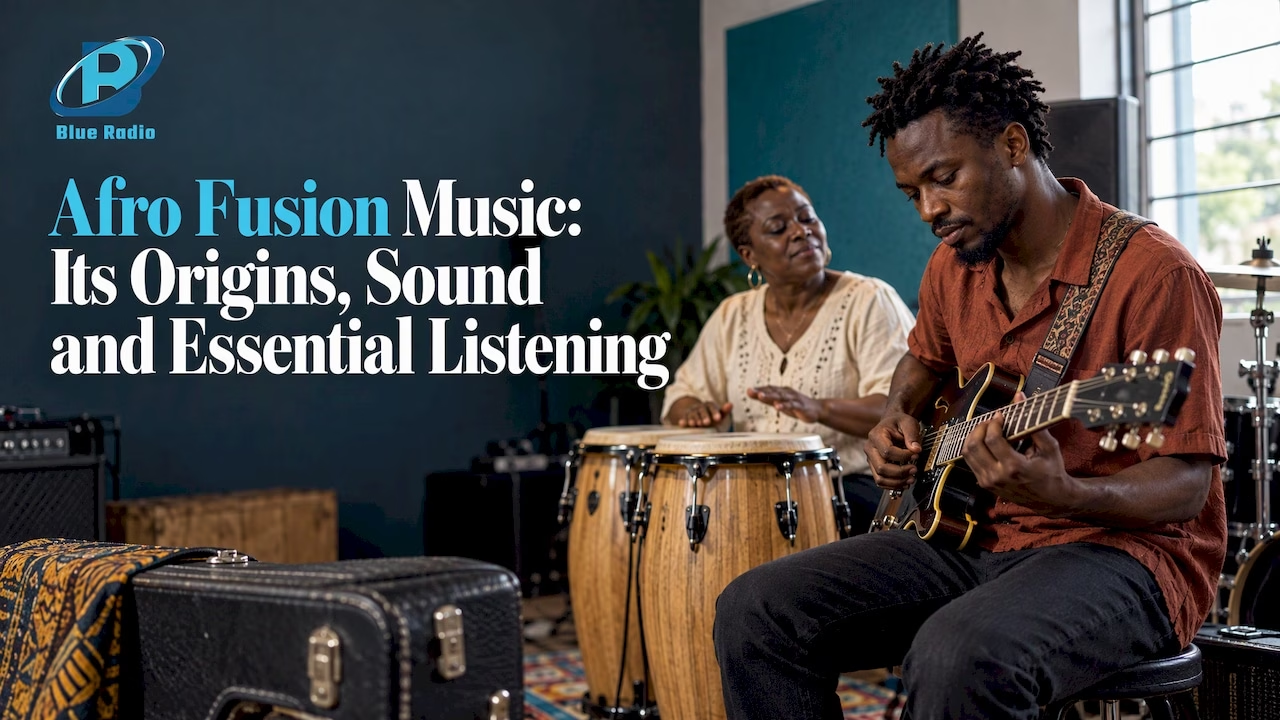
Afro fusion is African music blended with other genres: Afrobeat, highlife, kwaito or amapiano at the core, mixed with reggae, dancehall, hip-hop, R&B, jazz or pop. The label is loose on purpose. Artists use it when they refuse to stay inside one lane. The fastest way to understand it is to hear it, so we stream Afrobeat, Afropop, Amapiano, Bongo and related sounds 24/7 on Blue Radio, and this guide gives you the history, the argument over the name and a starting list.
- Afro fusion means an African-rooted sound mixed with reggae, dancehall, hip-hop, R&B, jazz, pop or other styles, not one fixed genre.
- The practice is old. The name became famous when artists such as Burna Boy and Davido began using it for their own music.
- People still debate how Afro fusion differs from Afrobeats, and the honest answer is that the boundaries overlap.
- South Africa’s Freshlyground, with Shakira’s “Waka Waka,” took an afro-fusion sound to a global audience.
- You can hear current Afro-fusion tracks and charts on Blue Radio any hour of the day.
Table of Contents
- What Afro fusion music actually means
- Where it came from: a long history of mixing
- Who put the name on the map
- Afro fusion vs. Afrobeats: why people argue
- How to recognize an Afro fusion track
- Afro fusion songs to start with
- A listening plan that works
- Listen on Blue Radio, or get your own music heard
- FAQ
- Sources
What Afro fusion music actually means
Think of Afro fusion as a method more than a genre. You take a rhythmic and melodic foundation from African music and you mix in whatever else the artist grew up on. The result can sound like a dancehall record with log drums, a highlife guitar over a trap beat or a kwaito groove with folk melodies.
A widely used reference describes Afro fusion (also written afrofusion or afro-fusion) as a style that emerged between the 1970s and 2000s, mixing jazz, hip-hop, kwaito, reggae, soul, pop, kwela, blues, folk, rock and Afrobeat. It also notes that the songs often use African languages next to English, French or Spanish.
A Nigerian news outlet describes the term as younger and hard to pin down. That flexibility is the point: it lets an artist borrow from highlife, fuji, reggae, hip-hop or R&B and reshape it into something contemporary.
A quick vocabulary check helps, because these words get mixed up:
- Afrobeat (singular) is the style created by Nigerian bandleader Fela Anikulapo Kuti in the late 1960s and 1970s.
- Afrobeats (plural) is the modern pop umbrella for music from West Africa and the diaspora, developed mainly in Nigeria, Ghana and the UK in the 2000s and 2010s.
- Afro fusion is a looser tag for music that blends African sounds with other genres. Some artists use it as a more personal label than Afrobeats.
Where it came from: a long history of mixing
Fusion did not start with streaming. African musicians have blended local traditions with outside sounds for generations.
Lagos, Fela and the Afrobeat base
A 2024 academic study in the Journal of World Popular Music argues that Afrobeat grew out of 1960s and 1970s Lagos, in a social scene that emerged during the Nigerian Civil War. It fused West African highlife with American popular music, a link strengthened by James Brown’s 1970 tour of West Africa.
Billboard’s history of the genre says Fela’s Afrobeat combined jazz, soul and Ghanaian highlife with Yoruba, Ewe and Ga polyrhythmic drumming. In other words, the base that Afro fusion artists build on was already a fusion.
Around the same time, Orlando Julius Ekemode and Fela were two central figures in a fusion of African and global grooves that became Afro-funk. A Nigerian newspaper feature recalls that critic Lloyd Bradley credits Julius’s 1966 album Super Afro-Soul as probably the earliest prominent example.
Ghana, Hamburg and hiplife
Billboard also documents two Ghanaian chapters. In the 1980s, Ghanaian migrants in Hamburg produced “Burger Highlife,” and in the mid-1990s hiplife arrived, with rappers like Reggie Rockstone rapping in Twi, Ga and Ewe over West and East Coast-inspired instrumentals. Same idea, different city: local language and rhythm on top of hip-hop.
South Africa’s version
In South Africa, the band Stimela, led by Ray Phiri, fused mbaqanga and jazz, and is cited as an early example of the afro-fusion approach. Later came Cape Town’s Freshlyground, formed in 2002. Music In Africa’s profile says the band mixes afro-fusion, kwaito, kwela, jazz and folk in several languages, and is best known for co-creating Shakira’s 2010 FIFA World Cup anthem “Waka Waka (This Time for Africa).”
Who put the name on the map
The term really took off in the 2010s through artists who wanted a label that described their blend.
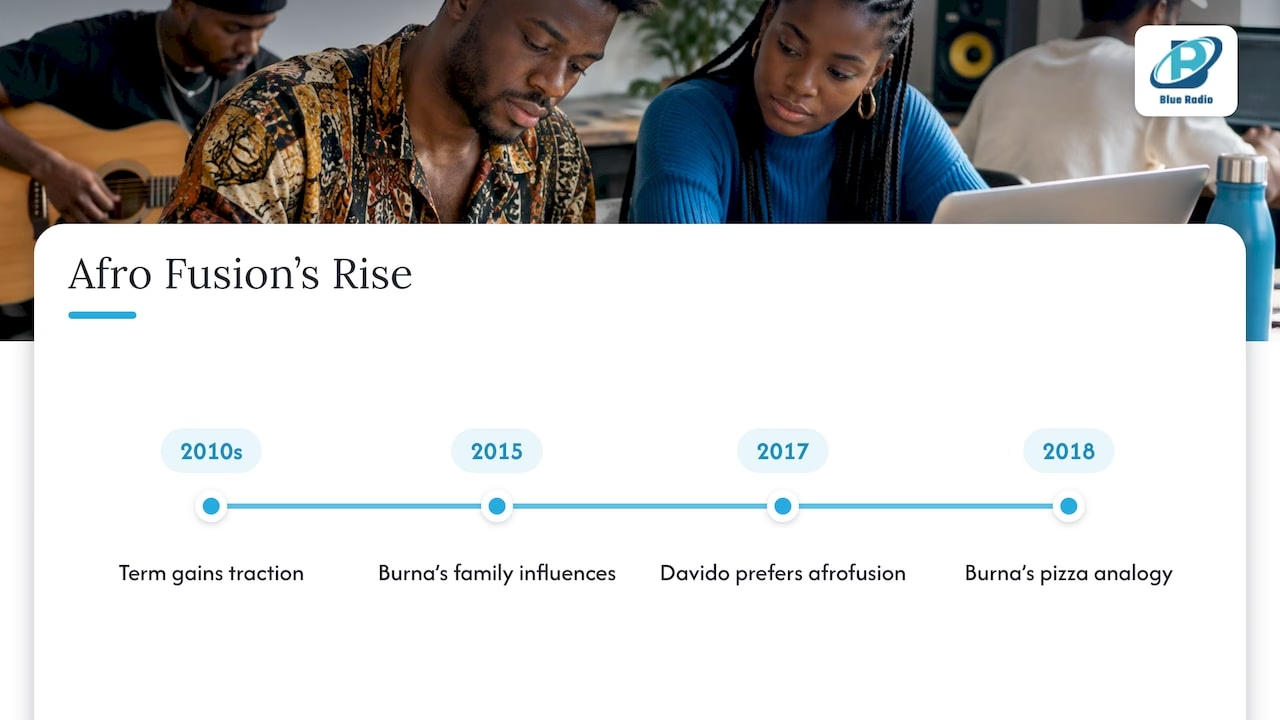
Burna Boy called his sound Afro-fusion early on. In a 2018 interview he said it was basically like a pizza: Afrobeat is the dough, and the reggae, dancehall, R&B and hip-hop are the toppings. He named Fela Kuti, The Clash, DMX, Tupac, Big Pun and UK grime artists Wiley and Skepta among his influences. In a 2015 interview he also said his father played reggae and Afrobeats and his grandfather managed Fela.
Davido said in 2017 that he preferred to call his music afrofusion, with elements of hip-hop, Ghanaian highlife, South African kwaito and R&B. His explanation was simple: in Nigeria artists mix sounds and collaborate because it comes naturally. In the same piece, Mr Eazi described his own sound as “Banku” music, an African fusion with a chilled, laid-back vocal style.
A newer voice, BNXN, defines it as a combination of every genre with your core African element. His debut album Sincerely, Benson blends dancehall, R&B, highlife and drill.
That is why “who is the king of Afro fusion?” has no official answer. Burna Boy is the artist most often linked to the label, while Davido, Wizkid, BNXN and others use it too. Red Bull’s history notes that Wizkid, Davido and Burna Boy have all referred to their sound as Afrofusion.
Afro fusion vs. Afrobeats: why people argue
The debate is worth knowing because you will see it in comment sections.
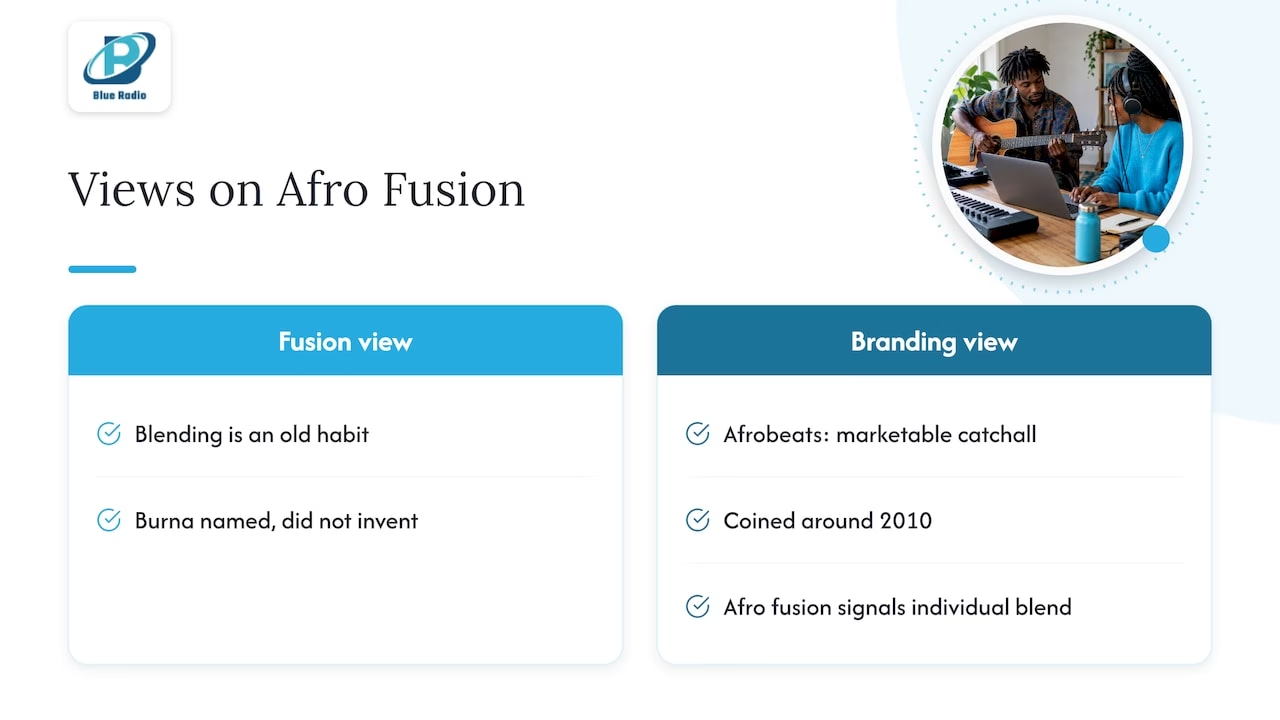
One side says Afro fusion is simply Afrobeat mixed with other genres, and that Burna Boy named the practice rather than inventing it. Nnamdi O. Madichie, writing in The Conversation, makes this case and says the blending is an old habit of the Nigerian music industry.
The other side is about branding. Nigerian journalist Joey Akan explained in a Pitchfork podcast that UK-based African communities coined “Afrobeats” around 2010 as a marketable catchall for popular West African music. The Red Bull history dates the name to 2011 and credits Ghanaian-British radio host Abrantee. If Afrobeats is a catchall, some artists prefer a tag that says more about their individual blend.
BNXN gave the artist’s view: in his telling, Burna Boy wanted to signal that there was a lot of substance in his music beyond what the West hears as just a good time. Red Bull’s writer goes further and suggests that “Afropop” may be the most accurate name for the current wave, since artists refuse to be bound by one genre.
For a listener, the practical takeaway is easy. Treat the label as a clue, not a rule. If a track has an African groove at its center and something else in the mix, it belongs in the conversation.
How to recognize an Afro fusion track
No checklist is official, but these signs show up again and again:
- A recognizable African rhythmic base. Afrobeat percussion, highlife guitar, kwaito bass, amapiano log drums or Bongo Flava melodies.
- A second genre that is easy to name. Dancehall bounce, a hip-hop verse, R&B harmonies, a drill pattern or a jazz horn line.
- Language mixing. Yoruba, Twi, Pidgin, Swahili, Lingala or isiXhosa next to English or French. “Waka Waka” itself moves between English, isiXhosa, Duala and Spanish, according to the reference entry on the genre.
- Collaboration across scenes. Features that pair an artist from Lagos with one from Accra, Kinshasa, London or the Caribbean.
Afro fusion songs to start with
These are good entry points, with a few that you can read about on our site:
- “Waka Waka (This Time for Africa)” by Shakira and Freshlyground. The 2010 World Cup song, and the clearest example of South African afro-fusion reaching a global audience.
- “Dai Dai” by Shakira and Burna Boy. A new pairing built for the 2026 World Cup. Read our write-up, Shakira and Burna Boy on “Dai Dai”.
- “Rarri” by Juls, Projexx and Valiant. A Caribbean Afro-fusion track that shows the diaspora side of the blend.
- “Putty” by Hunny Boy and Medikal. Another one we covered as Afro-fusion vibes from Ghana.
- “Alifa” by Fally Ipupa featuring DJ Maphorisa and Tresor. Congolese star power meets a South African producer on this collaboration.
- “Mikono Juu” by Iyanii. Afrobeats energy for Kenyan dancefloors, covered in our Iyanii feature.
- “Bongo” by Maby. A modern African music piece that leans on the Bongo sound.
If you want to see what listeners are playing right now, check the Afrobeat Chart and the Bongo Flava Chart. Charts change with each update, so they work better than any static top-ten list.
A listening plan that works
If you are new to the sound, do not start by hunting for a single definition. Try this instead:
- Hear the roots. Listen to one Fela Kuti track, such as the 1972 song “Trouble Sleep Yanga Wake Am,” which Pitchfork’s guide uses to show how Afrobeat drew on jazz horns, soul and traditional chants.
- Jump to Burna Boy and Davido to hear the mix of dancehall, R&B and hip-hop with an African center.
- Add a regional flavor: kwaito and kwela from South Africa, highlife and hiplife from Ghana, Bongo Flava from East Africa.
- Let a station do the discovery. When you stream a curated show, you hear what a DJ places next to what, and that sequencing teaches you how the genres fit together faster than a playlist you build alone.
Our view: fusion is the sound of the diaspora
We built Blue Radio around Afrobeat, Afropop, Amapiano, Bongo, Afro-Highlife and the urban African sounds that sit between them. Afro fusion is not a niche to us. It describes what listeners across the diaspora already hear in their daily lives: a Lagos groove in a London club, a Johannesburg bassline in a Houston playlist, a Kingston riddim under a Ghanaian verse.
That is why we run it as a 24/7 stream with curated shows presented by DJs and music scene insiders. A genre that refuses to sit still needs people who follow it daily, can place a new release in context and know why a track belongs next to another one. Our schedule, charts and playlists are designed to make that discovery easy, whether you are a lifelong fan or just heard “Waka Waka” and wanted more.
If you want one place for the whole range of African urban music, from Afrobeats stars to rising Bongo artists, we believe that is where you should be listening.
Sito
Listen on Blue Radio, or get your own music heard
Blue Radio is a live station for Afro-centric music with schedule listings, curated DJ shows, playlists and chart pages. Open the station to start listening, or browse the charts to see what is moving.
If you make Afro-fusion music, you can submit your song for a one-off $6 submission fee. Brands and promoters can reach our audience through the promotion plans: Community Shoutout at $9.30 per month, Brand Spotlight at $29.90 per month and Prime Time Ads at $47.90 per month.
FAQ
What is Afro fusion music?
It is music that blends African sounds, such as Afrobeat, highlife, kwaito or amapiano, with other genres like reggae, dancehall, hip-hop, R&B, jazz and pop. It is a flexible label rather than a strict genre. Artists often use it to describe a personal, genre-crossing style.
Who is the king of Afro fusion?
There is no official title. Burna Boy is the artist most associated with the term, and he describes his sound as Afro-fusion. Davido, Wizkid and BNXN also use the label, and South Africa’s Freshlyground helped popularize the style globally through “Waka Waka.”
Is Afro fusion the same as Afrobeats?
Not exactly, though they overlap. Afrobeats is the broad pop umbrella for music from West Africa and the diaspora. Afro fusion usually points to a blend of Afrobeat or other African styles with outside genres. Many songs fit both labels, and critics and artists disagree on where the line sits.
What is an example of fusion music?
In this genre, “Waka Waka (This Time for Africa)” by Shakira and Freshlyground is a classic one. For a newer example, try Burna Boy’s work, which mixes Afrobeat with reggae, dancehall, R&B and hip-hop. You can also find current Afro-fusion releases on Blue Radio.
Where can I hear Afro fusion songs and artists?
Tune in to our 24/7 stream and check the schedule for DJ-curated shows. The Afrobeat and Bongo Flava charts on our site also show which tracks are getting attention.
Sources
- Afro fusion (reference entry)
- Fuji, Highlife, Afro-Fusion: Music Genres Fighting for Their Future
- Reconstructing Afrobeat as a Scene-Based Genre, Journal of World Popular Music
- Afrobeats’ Rise: History From West Africa to The Diaspora, Billboard
- Orlando Julius Ekemode And The Prophecy Of An African Pop Explosion
- Freshlyground, Music In Africa
- Drake-approved star Burna Boy, Interview Magazine
- Meet Burna Boy, The Fader
- Davido, Mr Eazi and How Afrofusion Went Mainstream
- BNXN: meet the next Afrofusion superstar, NME
- The evolution of Afropop, Red Bull
- Setting the record straight: Burna Boy didn’t create a music genre called Afrofusion, The Conversation
- Afrobeats: A Guide to West African Pop, Pitchfork
Recommended


Post comments (0)